Listen To:


Selected MP3s of guitar instrumentals, jazz, big band, and classic easy listening from the original vinyl.

Welcome to Guitars & All That Jazz

Welcome to Guitars & All That Jazz

Guitars & All That Jazz was a radio station that webcast via Live365 for 11 years, ending in June 2011. The playlist consisted of guitar instrumentals, jazz, big band, early rock 'n' roll, lounge music and classic easy listening.

I hope to share some of this music with you via this blog. Most of it will be taken from the original vinyl (LPs and 45s) , cassettes and the occasional commercially unavailable CD.

Here's hoping you'll find something to enjoy. Please note files are available only for a limited time.

I urge you to purchase the digital version of the albums featured, either on CD or via download, wherever possible.

Listen to the Music
There are now two music streams. Click the appropriate player to the right.
1. Guitars & All That Jazz: Five hours of the best in jazz, guitars and other instrumental gems. New songs are added weekly.
2. Tiki Shores: Music to sweep you away to a tropical isle, a South American dance floor or a bossa nova on the beach at Rio. About 4.5 hours of classic exotica music, Latin rhythms and bossa nova.
Powered By Blogger

Wednesday, December 05, 2012

George Van Eps - Mellow Guitar


When George Van Eps (1913-1998) came up with the idea in the late 1930s of adding a seventh string to his guitar, it allowed him to play a bass line along with his chords and lead solos.

Van Eps became a master of the seven-string instrument, which was adopted by only a few other jazz guitarists, among them Howard Alden (a former student of Van Eps). Late in Van Eps's career he and Alden recorded three duo albums for Concord.

Mellow Guitar was issued by Columbia in 1956, in mono only apparently. The recording featured three distinct settings for Van Eps's guitar: a basic rhythm section, a nine-piece band arranged by Paul Weston with whom the guitarist frequently worked, and a string orchestra. A link to a sample track (taken from the vinyl LP) is below.

What Is This Thing Called Love


Mellow Guitar was available for a short time on CD on the Sundazed label, which issued it in 1999. Copies now demand premium prices, $30 and up. The album is also available as a download, but it's from the British company Hallmark, which often uses vinyl as its source. The usual caution -- listen before buying -- applies.

Via YouTube, here's another selection from Mellow Guitar.

Monday, December 03, 2012

Verrill Keene - An Afternoon Affair


This is Verrill Keene's one and only release, which came out on the obscure Showtown label in 1966. That Keene didn't put out anything else isn't all that surprising -- he isn't a real person.

Verrill Keene is a pseudonym for Bob Keane, the owner of Del-Fi Records, the company that put out all those great surfing records in the 1960s. Keane invented Keene and his playboy persona to push this release. Unfortunately, bachelor pad music was pretty well dead by the time An Afternoon Affair came out and the album promptly disappeared.

Thirty years later, in 1996, during the bachelor pad and lounge music revival, Keane decided to release the album on CD. Below you can listen to the title track.

An Afternoon Affair


The CD has long since been discontinued but cheap copies are plentiful in the Amazon Marketplace. An Afternoon Affair is also available as as a download from CD Universe, Amazon and elsewhere, but it's way cheaper to buy the CD.

Saturday, December 01, 2012

The Brasileros - Bossa Nova: The New Sound in Jazz from South America


This is not the quick ripoff of the bossa nova craze of the early 1960s that you might expect from the cover.

Released on the ultra-cheap Diplomat label in 1962, Bossa Nova: The New Sound of Jazz from South America features some well-known jazzmen who apparently made the recording when funds were tight. According to a couple of online blogs (including the excellent Unearthed in the Atomic Attic), the personnel includes a young Kenny Barron on piano and Bill Barron on sax, with a rhythm section of Ron Carter on bass and Charlie Persip on drums.

Although the music is great the recording quality is substandard, to put it mildly. The sample track, Bossa Nova Blues, is in stereo, sort of. Sounds like fake stereo to me, which leads me to suspect that the session (date unknown) was done in mono.

Bossa Nova Blues


Much of the information on this session surfaced during an interview that Kenny Barron did with jazzreview.com in 2001.

The album has never been released on CD and is not available as a download.

Wednesday, November 28, 2012

Uncredited - Swinging Sax


Here we go with another of those no-name cassettes I'm so fond of -- and again it's from Switzerland. Swinging Sax was distributed in North America by the Quebec company Madacy and sold in K-Mart, Wal-Mart and other similar stores.

As always, there's no recording information. No release date on the cassette either. The insert claims all titles are traditional (which I doubt, but I'm no expert) so the recording company didn't have to pay any songwriter royalties.

Below is a link to a sample track, Gelatino, with sax that has echoes of Billy Vaughn or Max Greger and a rhythm section that strongly suggests Bert Kaempfert. I like the tune a lot -- that is until a female chorus starts oohing and aahing half way through. Oh, well ...

Gelatino


All 14 tracks from the Swinging Sax cassette have turned up on CD at least twice.


Happy Sax was a Swiss release (date unknown) and doesn't appear to be in print. The selections are also included in 50 Golden Sax Favorites, a three-CD set put out by our friends at Madacy. Unfortunately the set also contains about a dozen songs you probably never want to hear again (Feelings anyone?). Still when used copies can be had for less than a buck there should be enough decent tunes to keep most listeners happy.

Sunday, November 25, 2012

Enoch Light & the Light Brigade - Cecilia


Enoch Light's contributions to the world of stereo recording were detailed in an earlier post. For a more complete view of Light and his recordings, there are several excellent web resources, including The Space Age Pop Music Page.

After Light sold his ground-breaking Command Records in 1965 he quickly formed the Project 3 label. There was now less emphasis on exploring the possibilities of stereo -- and there was a distinct change in the type of songs that were being recorded as well. While Command emphasized albums of standards by the likes of Berlin, Gershwin and Porter, Project 3 concentrated on easy listening versions of current pop hits.

Case in point is the version of Paul Simon's Cecilia recorded by Enoch Light & the Light Brigade in 1971. It was issued as a single (b/w Eglantine) and included on the album 4 Channel Dynamite, which was designed to cash in on the shortlived phenomenon of Quadraphonic sound. More on Quadraphonic in a moment, but first here's a link where you can get Cecilia. The MP3 is taken from a stereo 45.

Cecilia


Quadraphonic was an early form of the surround sound that is commonly used today in TV sound systems. But in the 1970s few people were ready to purchase the special equipment and extra pair of speakers that were needed to reproduce four-channel sound.

If you have a few Quadraphonic albums kicking around and are able to hook a turntable up to your surround sound system, you'll be able to hear these LPs in four-channel sound. I tried it a few years ago and it worked fine, but I really wanted to keep my TV and music systems separate.

To finish up -- another selection from 4 Channel Dynamite, taken from YouTube. Light's version of the big band standard Cherokee was also included in another of his albums, Big Band Hits of the 30s and 40s.

Friday, November 23, 2012

Rubin Mitchell - Presenting Rubin Mitchell


Two 1967 LPs for Capitol, Presenting Rubin Mitchell and Remarkable Rubin, and an earlier self-released album on the Starmaker label, The Golden Hands of Rubin Mitchell, appear to be the pianist's entire recorded output. There were some singles on Capitol as well but as far as I can tell most, if not all, were tracks taken from the two albums.

According to the Schenectady Gazette newspaper of March 7, 1967, Mitchell was playing in the Albany-Troy, New York, area before being signed to Capitol. That's where his debut LP Golden Hands was recorded. After making his Capitol recordings he played in several New York City clubs and bars, then seemingly disappeared from the music scene. There is little information about him on the web.

Below is a link to a track from his first Capitol album, Presenting.

What Now My Love


Rubin Mitchell's version of Mas Que Nada appeared on Bossa Novaville, Vol. 14 of Capitol's Ultra-Lounge series of CDs. It's still in print and easily obtained.

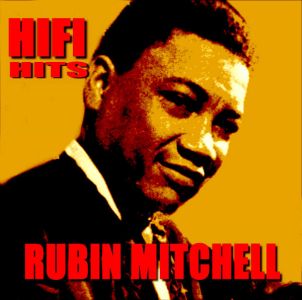
There is a Mitchell collection called HiFi Hits available as a download. However, its cheap looking cover makes its origin a bit suspect.


Although these are tracks from his Capitol recordings, this release certainly didn't orginate with that company. Listening before buying would be a good idea.

Here's another Rubin Mitchell track, taken from YouTube.


Wednesday, November 21, 2012

Helen O'Connell with Joe Reisman and His Orchestra - Amapola


Big band vocalist Helen O'Connell (1920-1993) achieved her greatest fame with the Jimmy Dorsey Orchestra in the early 1940s. Partnered with vocalist Bob Eberly, she had a series of Latin influenced hits, including Brazil, Green Eyes, Tangerine, Yours and Amapola.

In the late 1960s, O'Connell made two recordings for Reader's Digest, reprises of her Dorsey Band hits, Amapola and Green Eyes. These sides were included in a number of various artist compilations that stretched into the digital era.

O'Connell's re-recording of Amapola, accompanied by Joe Reisman and his orchestra, turned up in a 1970 vinyl box set called Let's Take a Sentimental Journey. The link to the track is below.

Amapola


Helen O'Connell's Reader's Digest recordings of Amapola and Green Eyes are available on a 17-track album called The Reader's Digest "Songbird" Sessions, which also includes selections by Margaret Whiting and Helen Forrest. The album is available only as a download from all the major sources (iTunes, Amazon, eMusic, etc.).

Here's the original recording O'Connell and Bob Eberly made with the Jimmy Dorsey Orchestra in 1941.